
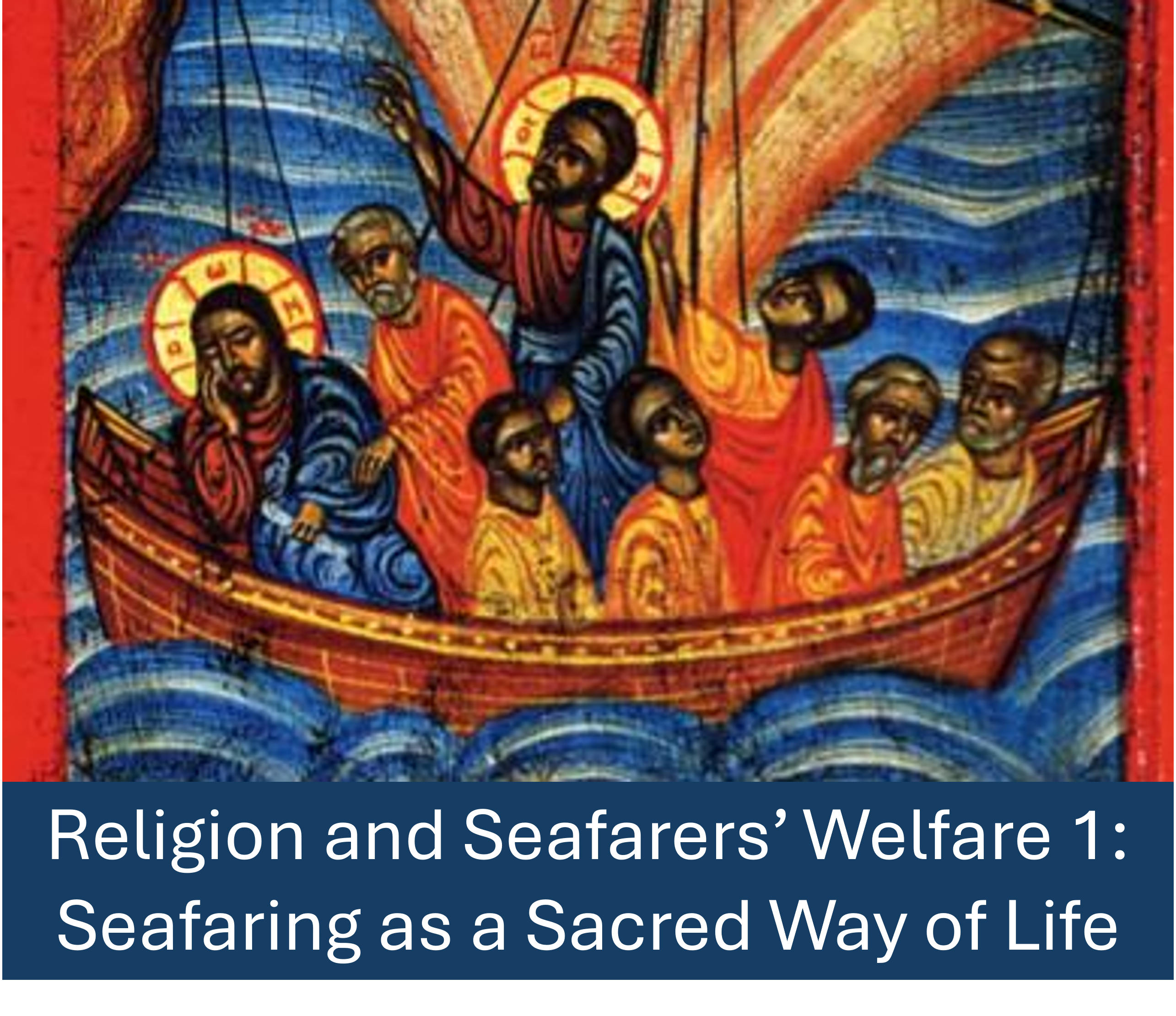
The Religion and Seafarers' Welfare units are meant to help one think about seafarers and seafarers' welfare in spiritual terms. Like many seafarers' welfare organizations, it has a Christian perspective, but it is not meant to be exclusive: the point is to consider the relationship among seafarers' welfare, their religion, and ours, whatever it might be.
In this first unit, Seafaring as a Sacred Way of Life, we consider the religious aspects of welfare work in a nominally secular maritime environment. Why should religious people be involved in seafarers' welfare? Given seafarers' different attitudes to religion onboard, how can we best support them? Is religion part of welfare? What is the role of our own specific religious perspectives and sense of mission, particularly as Christians? In other words, we will consider 'maritime missiology'.
Thank you to all those who have contributed to this course - including Mario Biazon, Michelle DePooter, Peter Im, and Stephen McKinney.
The Religion and Seafarers' Welfare units are meant to help one think about seafarers and seafarers' welfare in spiritual terms. Like many seafarers' welfare organizations, it has a Christian perspective, but it is not meant to be exclusive: the point is to consider the relationship among seafarers' welfare, their religion, and ours, whatever it might be.
In this second unit, How Is the Sea Sacred?, we explore religious perspectives on the sea. The sea features heavily as a special and sacred place in Scripture - as a place of creation, of destruction, and of the goodness of God. These realities are also recognized in many other religious and cultural traditions. And not only is this a recurring reality in Scripture, it is also found in texts ranging from the ancient Babylonian creation myths to the modern fiction of Herman Melville.
Thank you to all those who have contributed to this course - including Mario Biazon, Michelle DePooter, Peter Im, and Stephen McKinney.
The Religion and Seafarers' Welfare units are meant to help one think about seafarers and seafarers' welfare in spiritual terms. Like many seafarers' welfare organizations, it has a Christian perspective, but it is not meant to be exclusive: the point is to consider the relationship among seafarers' welfare, their religion, and ours, whatever it might be.
In thinking about seafarers' ministry, it is important to think not only about what makes the sea special and sacred, but all the other aspects of seafaring life: travel and isolation, commerce, and providing for family, e.g. This third unit, How Are Seafarers Sacred?, considers all these things from the perspective of religious ministry.